
Author: Arsham Raeisi
Abstract
Revolutions are complex phenomena that do not copy each other, but there are many commonalities in the stages of their formation and victory. Based on the classic theory of Crane Brinton in his book The Anatomy of Revolution (1938) and a review of historical examples, this part of the article analyzes the early stages of revolution and the key factors that transform protests into successful revolutions.
The goal is to identify recurring patterns that can increase the likelihood of a popular movement winning and turning it into a revolution, without claiming a fixed formula without exceptions.
Introduction: The Early Stages of Revolution According to Brinton’s Theory
In his book Anatomy of Revolution, Crane Brinton likens major revolutions (such as those in France, Russia, England, and America) to a disease that has similar stages:
Weak government (early signs such as corruption, oppression, economic instability, and class divisions).
Separation of elites and intellectuals from the regime (irreformability of the government).
Paralysis of the repressive system (inability to use force to maintain order).
Historical examples such as the French Revolution (1789), where Louis XVI failed to suppress the rebellions, or the Russian Revolution, where parts of the army turned against the people, confirm these stages. Brinton emphasizes that revolutions often begin with structural crises and that without this initial weakness, protests do not develop into revolutions.
Analysis and study of the factors that turned protest into revolution
After the initial stages, the following factors can transform protests into a successful revolution. These factors are recurring and, together, reduce the cost of victory for the people and increase the chances of success:
- The intensity and continuity of the protests
Protests must be intense and persistent so that the government loses the opportunity to rebuild and suppress. Continuity exhausts the regime’s forces and loses initiative.
Example: In Tunisia (2010-2011), the self-immolation of Mohamed Bouazizi sparked protests, but the protests continued for weeks, forcing Ben Ali to flee. This was the beginning of the Arab Spring.
- The spread and spread of protests among different groups
When protests spread across classes, occupations, and geographic regions, the movement becomes national, and groups with different interests unite around a common goal (the fall of the regime).
Example: The Solidarity movement in Poland (1980s), which began with a workers’ strike and spread to the entire country and different classes, forced the communist regime to cede power.
- Millions of people and non-violence
Large, peaceful crowds occupy public spaces and challenge the balance of power. Nonviolent protests allow for broad participation (including women, the elderly, and even conservatives) and create divisions within the forces of repression.
Positive example: Serbia (2000), millions of people peacefully took to the streets and the Milosevic regime collapsed.
Negative example: Syria (2011), the escalation into violence caused some of the protesters to retreat and the regime to continue.
- Organizing crippling strikes
A general strike (beyond one trade union) cuts off people’s cooperation with the government and makes it impossible to govern the country.
Example: again the Polish Solidarity movement, which crippled the communist regime’s economy from within.
- The government’s international isolation
Lack of external support increases the cost of repression (sanctions, media and diplomatic pressure).
Example: The fall of the Eastern Bloc (1989), when Gorbachev announced that the Soviet Union would not intervene militarily, protests in Poland, Czechoslovakia, and East Germany quickly won.
- Economic crisis and inability to make a living
Revolutions often occur when the regime is unable to control inflation, provide basic goods, and provide welfare. Economic crisis alone is not enough, but revolution is difficult without it.
Example: France (1789), a deep financial crisis made people’s lives difficult and made revolution inevitable.
- Ideological collapse and legitimacy crisis
When belief in the regime’s ideology is lost, the government remains only by force and collapses from within.
Example: East Germany (1989), socialist ideology was not only uninspiring, but also the subject of ridicule.
- Clear leadership for the transition
The presence of a leader or a clear plan for after the fall prevents chaos and smooths the transition of power.
Example: South Africa (1990), Nelson Mandela and the anti-apartheid program made transition possible without civil war.
Conclusion
The factors mentioned in this article are not a fixed and unchanging formula, and history is full of exceptions and differences, but these patterns are recurring and very powerful, and have been clearly seen in past successful revolutions.
In Iran today, almost all of these key factors are prominently present or are intensifying:
- The intensity and persistence of protests in recent years
- Their expansion and inclusion among various segments of society (from workers and teachers to students, women, marketers, and even parts of the armed and religious forces)
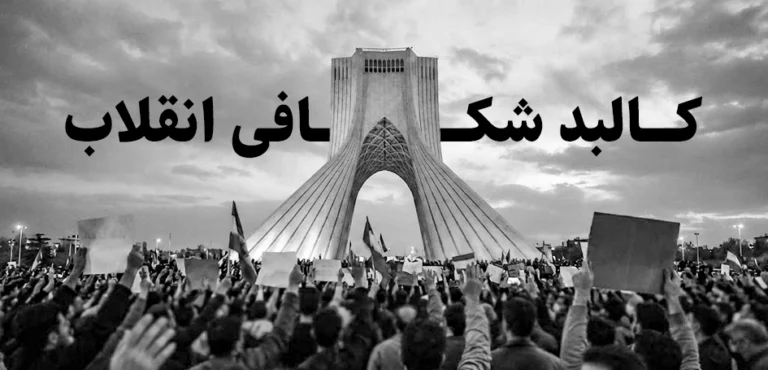
- Large and mostly peaceful presence of people on the streets
- Organizing crippling strikes in key sectors of the economy
- The growing isolation of the ruling regime in the international arena (sanctions, severance of relations, and diplomatic pressure)
- Deep economic crisis, rampant inflation, and inability to provide for people’s livelihoods
- The collapse of belief and ideological legitimacy of the system, which has survived only through force and repression
- The potential leadership of Prince Reza Pahlavi for the transition period
When these factors exist simultaneously, the likelihood of these widespread protests turning into a victorious revolution is very high.
History shows that regimes faced with such a set of structural weaknesses find the cost of maintaining power very high and often succumb to the collective will of the people.
Iran appears to be on the verge of such a turning point.
Resources
Brinton, C. (1938). The Anatomy of Revolution. Prentice-Hall.
Skocpol, T. (1979). States and Social Revolutions. Cambridge University Press.
Goldstone, J. A. (1991). Revolution and Rebellion in the Early Modern World. University of California Press.
Kuran, T. (1991). “Now Out of Never: The Element of Surprise in the East European Revolution of 1989”. World Politics, 44(1), 7-48.